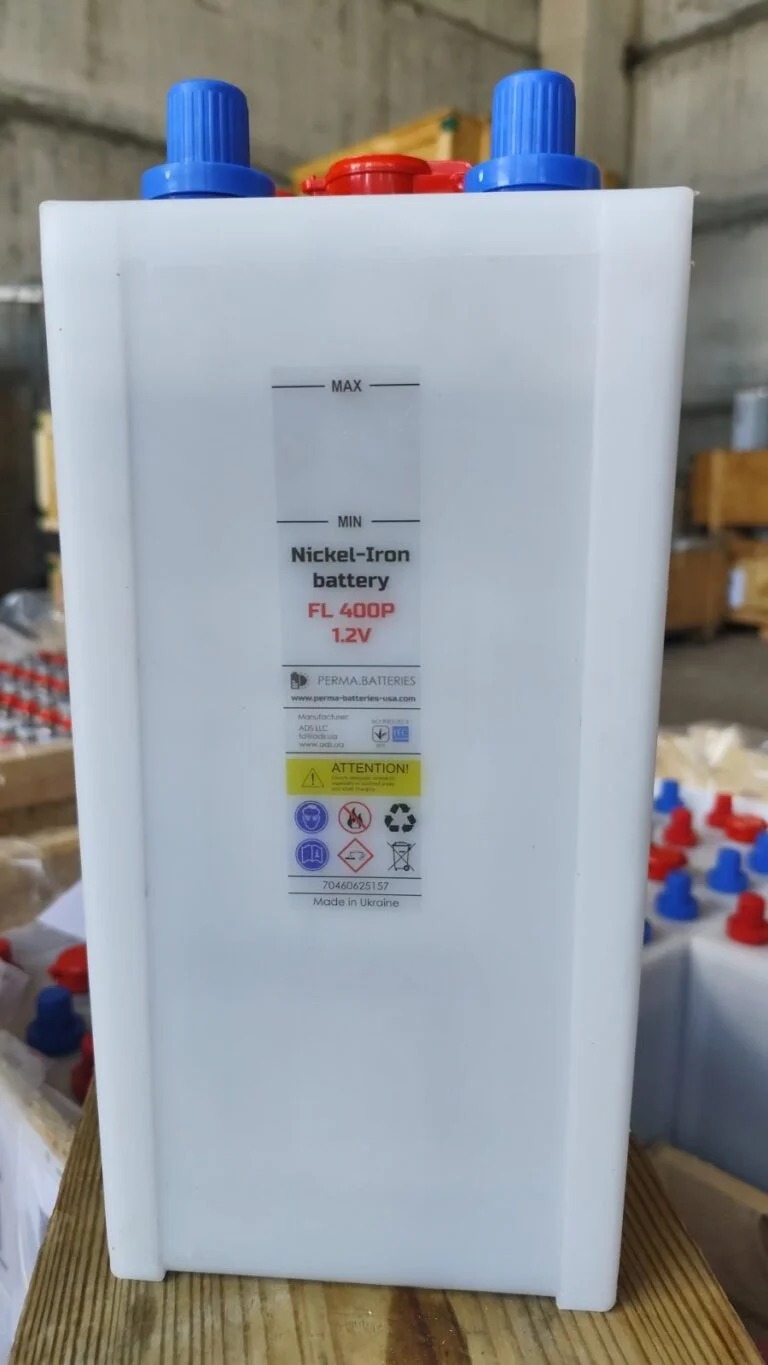
When shopping for a solar battery, most people make the critical mistake of looking only at the initial purchase price. They see a lead-acid battery for $200 and a nickel-iron cell for significantly more, and they assume the lead-acid is the “cheaper” option. However, this short-term thinking is the most expensive mistake an off-gridder can make. To understand the real value, you must calculate the Total Cost of Ownership (TCO) over the lifespan of the system.
Energy storage is an investment, not a one-time purchase. You are buying a supply of kilowatt-hours for the future. When you do the math on how much it costs to store energy over a period of thirty years, the Nickel-Iron Battery proves to be drastically cheaper than any other technology available. It is the classic case of “buying quality once” versus “buying junk repeatedly.”
The Cycle of Replacement
Let’s look at the timeline of a typical off-grid home over 30 years. If you choose lead-acid batteries, you will likely replace them every 5 to 7 years. That means you are buying, shipping, and installing 5 or 6 complete battery banks over that period. Each replacement involves inflation-adjusted prices, expensive freight shipping for heavy lead, and the labor of swapping them out.
The Lithium Equation
Lithium batteries offer better life than lead, perhaps 10 to 12 years if managed perfectly. However, even with lithium, you are looking at 2 or 3 complete replacements over a 30-year horizon. Furthermore, lithium batteries are complex electronic devices that cannot be repaired; if the BMS fails after the warranty expires, the entire unit is often trash. The Edison Battery avoids this by having no electronics to fail and a lifespan that covers the entire 30-year period with a single purchase.
Inflation Proofing Your Energy
By purchasing a lifetime battery today, you are effectively pre-paying for your energy storage for the next three decades at today’s prices. You insulate yourself from future spikes in raw material costs, inflation, and manufacturing taxes. While your neighbors are paying double for their third set of batteries in 2035, you will still be using the same set you bought today, with zero additional capital expenditure.
Residual Value of the Nickel-Iron Battery
Another overlooked economic factor is the scrap value of the battery at the end of its life. Lead-acid batteries have some scrap value, but lithium batteries are actually a liability, often costing money to dispose of safely due to their hazardous nature. Alkaline batteries are made of nickel and iron, valuable commodities that will likely be worth a significant amount of money as scrap metal in 2050, putting cash back in your pocket.
Maintenance Costs vs Replacement Costs
Critics will point out that alkaline batteries require distilled water, which is a small ongoing cost. However, the cost of a few gallons of water per year is microscopic compared to the thousands of dollars required to replace an entire battery bank. The “maintenance penalty” is a myth when weighed against the “replacement penalty” of disposable batteries.
Efficiency and Capacity Utilization
While alkaline batteries have lower round-trip efficiency than lithium, they allow for 100% depth of discharge. This means you can buy a smaller nameplate capacity to get the same usable energy as a larger lead-acid bank (which can only be used to 50%). This efficiency of capacity usage helps narrow the upfront price gap, making the premium for the Nickel-Iron Battery smaller than it appears on the spec sheet.
Financial Breakdown of the Edison Battery
Here is why the math works in your favor.
- Purchase 1: Buy NiFe once. Cost is high, but final.
- Purchase 2: Buy Lead/Lithium 3-5 times. Cost is lower, but recurring.
- Inflation: NiFe owner is immune; others pay inflated future prices.
- Shipping: Pay freight once for NiFe; pay 5 times for Lead.
- Disposal: NiFe has positive scrap value; others have disposal fees.
- Downtime: No cost associated with system blackouts during replacement.
- Property Value: A lifetime power system increases home resale value.
- Labor: Save the physical cost/effort of swapping heavy batteries.
- Risk: Hedge against future supply chain collapses.
Conclusion on Battery Economics
If you are planning to live in your off-grid home for the long haul, the economic choice is clear. The “expensive” battery is actually the cheapest one you can own, and the “cheap” battery is a money pit that never stops taking from your wallet.
Investing in a Nickel-Iron Battery is a sound financial decision that pays dividends in stability and savings. You are securing your energy future with a one-time payment, freeing up your future income for things that matter more than batteries. It is the smartest way to buy power.
About the Author